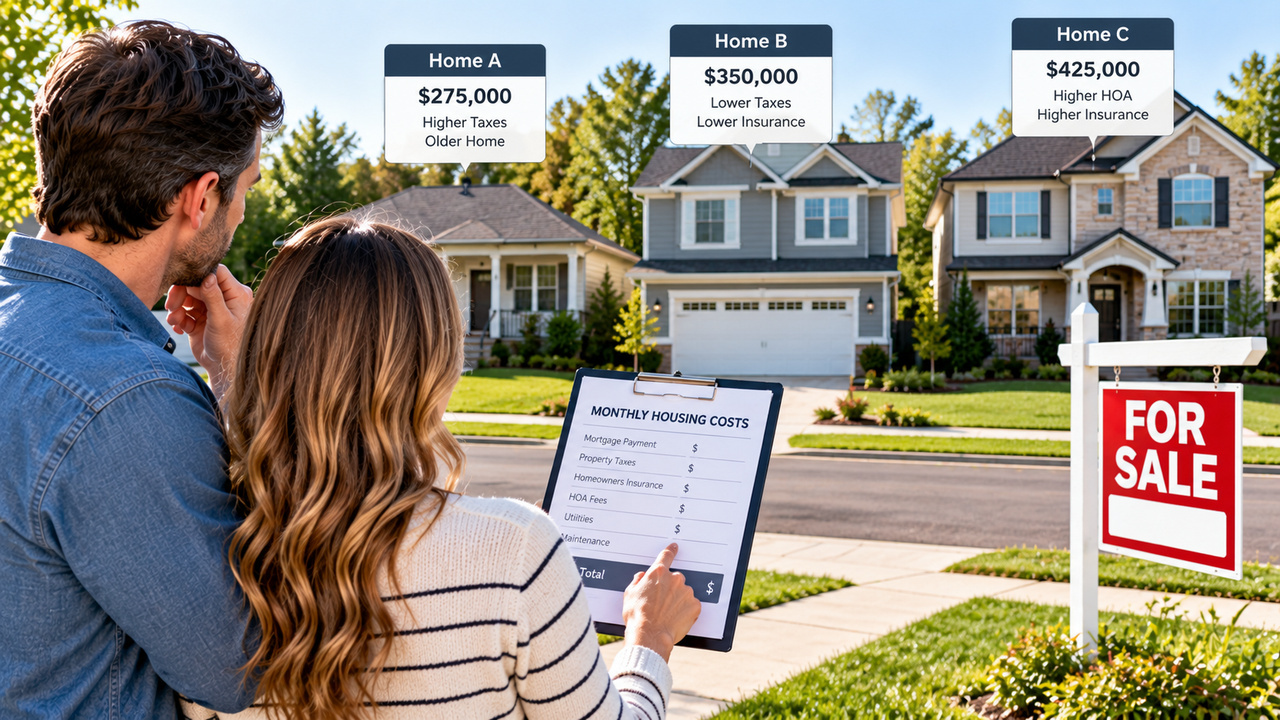
 When comparing homes, it is natural to assume that the property with the lowest price will also be the least expensive each month. But purchase price is only one piece of the housing-cost equation. Two homes with noticeably different price tags can produce surprisingly similar monthly expenses, and in some cases, the cheaper home can actually cost more to carry.
Property Taxes Can Change the Math
Property taxes can vary considerably between homes, even when the properties are located relatively close to one another. Tax rates, assessed values, special assessments, and local taxing districts can all affect the annual bill.
That means a lower-priced home with higher property taxes could potentially have a larger total monthly housing expense than a more expensive property with a lower tax obligation.
Insurance Is Not the Same for Every Property
Homeowners insurance is another expense that buyers should consider before comparing homes based solely on price.
The age of the home, roof condition, construction materials, property location, claims history, and certain features can influence insurance costs. A home that appears to be a bargain may be considerably more expensive to insure than another property.
Getting an insurance estimate before making a final decision can provide a much clearer picture of the expected monthly cost.
HOA Fees Can Make a Significant Difference
A condominium, townhome, or planned community may have monthly homeowners association fees. Those fees might cover valuable services or amenities, but they still become part of the household budget.
A $325,000 property with a substantial monthly HOA payment could cost more each month than a $350,000 home without one.
Buyers should also understand exactly what an HOA fee includes. If it covers expenses the homeowner would otherwise pay separately, the comparison becomes more nuanced.
The Property Itself Can Affect Financing
Not every home necessarily qualifies for the same financing options. Property type, condition, occupancy, appraisal results, and other characteristics may affect which mortgage programs are available.
Consequently, buyers should avoid assuming that the financing available for one property will automatically be identical for another.
Look at the Complete Monthly Picture
When comparing homes, consider the estimated principal and interest payment along with property taxes, homeowners insurance, mortgage insurance when applicable, HOA fees, and other recurring housing expenses.
The lowest listing price can certainly represent the better financial choice, but the price alone does not answer that question.
A better comparison is not simply “which house costs less?” but rather, “what will each of these homes actually cost me every month?”